
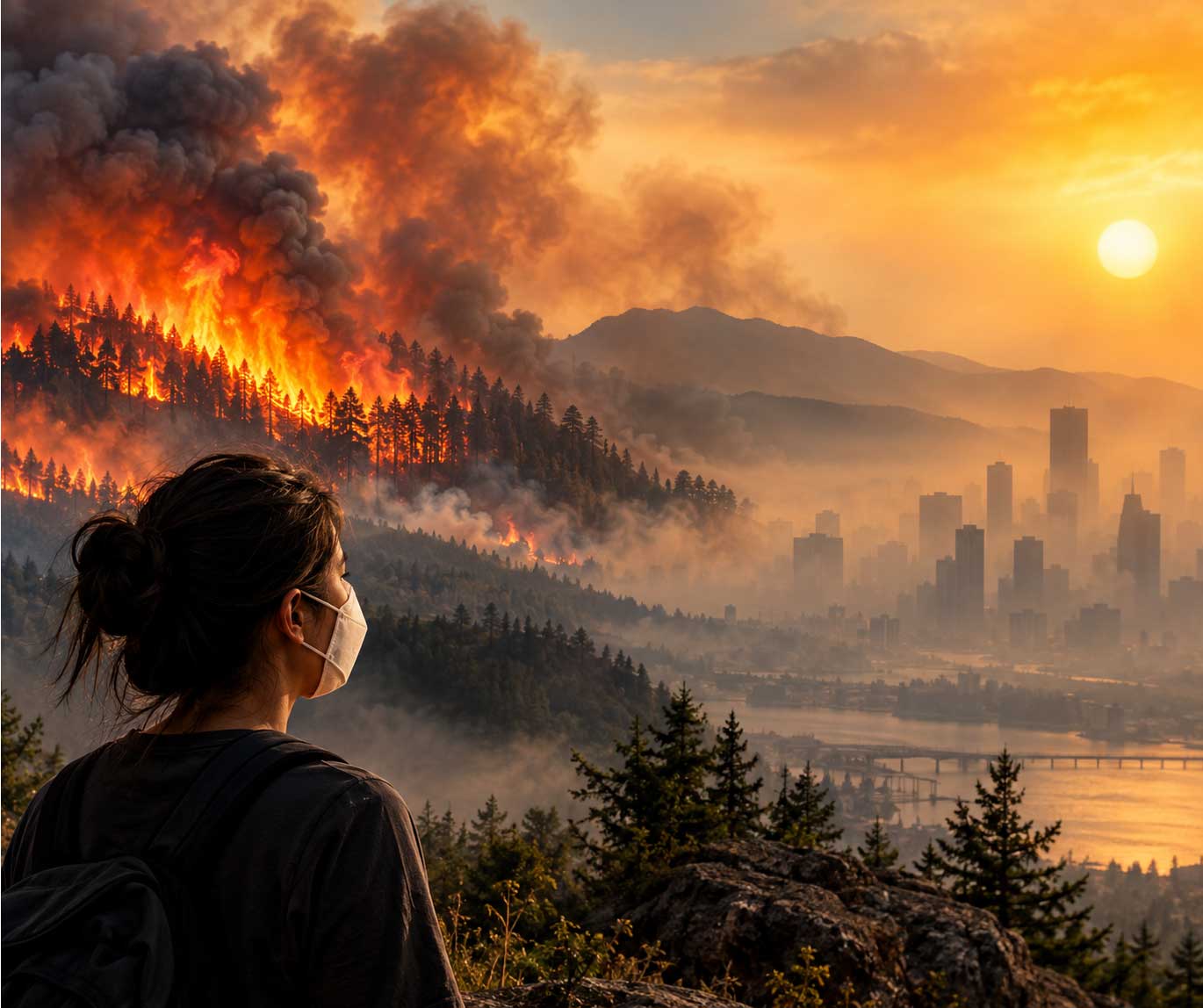
Wildfires and heatwaves are making air pollution harder to control, creating a growing threat to the air people breathe and their everyday health
Geneva, 7 September 2026 – The danger from wildfires and heatwaves does not end when temperatures rise or flames spread across forests. Their effects can linger in the air, sometimes traveling hundreds or even thousands of kilometres and affecting people far from the original source. As extreme weather becomes more intense, the connection between climate conditions, air pollution and human health is becoming increasingly difficult to ignore.
The World Meteorological Organization has warned that wildfires and extreme heat are creating serious challenges for air quality around the world. Its latest Air Quality and Climate Bulletin highlights how changing weather patterns can influence the movement and concentration of pollutants in the atmosphere.
Wildfire smoke is a major concern because it contains tiny particles known as PM2.5. These particles are small enough to travel deep into the lungs and can enter the bloodstream. Exposure can irritate the respiratory system and worsen problems such as asthma and other breathing difficulties. Long periods of exposure can also place additional pressure on the heart and lungs.
The danger becomes greater when wildfire smoke meets extreme heat. High temperatures can contribute to the formation of ground-level ozone, a pollutant that can cause breathing problems and irritation in the lungs. When smoke and ozone build up together, communities can experience significantly poorer air quality.
What makes the situation particularly challenging is that wildfire smoke does not respect geographical boundaries. A fire in one region can affect air quality in another, sometimes far from the flames. Cities can experience hazy skies and unhealthy pollution levels even when there is no fire nearby.
The health effects can be particularly serious for children, older adults, and people who already have respiratory or cardiovascular problems. However, healthy people can also experience symptoms such as coughing, throat irritation, headaches, tiredness, and difficulty breathing when pollution levels become high.
Another concern is the limited availability of air quality monitoring in some parts of the world. Several pollutants are not measured consistently, making it difficult for communities to understand exactly what they are breathing during major pollution events. Better monitoring systems could provide earlier warnings and help people make safer decisions about outdoor activities.
Individuals can also take simple precautions when air quality deteriorates. Checking local air quality information, reducing strenuous outdoor activities, keeping windows closed during periods of heavy smoke, and using appropriate indoor air filtration can help reduce exposure.
The growing risk highlights an important reality: climate and air quality are closely connected. Extreme heat can worsen pollution, while wildfires can release large quantities of harmful particles into the atmosphere. Together, these conditions can create a serious public health challenge.
Preparing for this changing environment will require better air quality monitoring, stronger public awareness, and improved emergency planning. Communities need timely information so they can respond quickly when dangerous conditions develop.
The challenge is not only about preventing fires or coping with high temperatures. It is also about protecting something people often take for granted: the air they breathe. As heatwaves and wildfires continue to shape environmental conditions, understanding their impact on air quality will be essential for protecting public health and building more resilient communities.

Latest News


Future Health Leaders Push for...
By Editorial Panel, Medical Busin...

Medical Business Outlook Magazine is a platform dedicated to exploring the growing medical business arena and the solutions that drive it forward. We connect readers with the latest trends, thought leadership, and expert perspectives that matter most in today's challenging medical environment.
We respect your privacy. The email address you provide will be used solely for subscription purposes and will not be stored or shared.
Subscribe Now
