
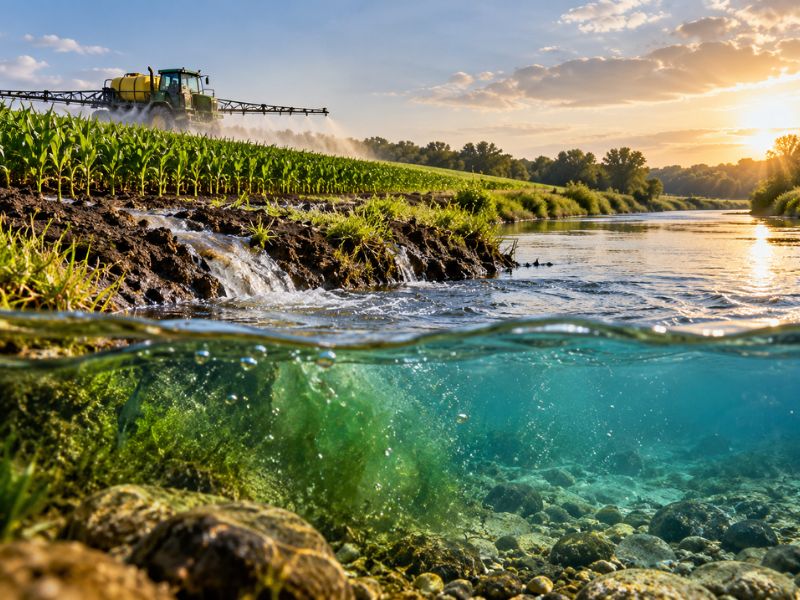
Growing concerns over atrazine contamination are putting drinking water sources under closer scrutiny
Washington, D.C., 5 October 2026 – Clean drinking water is something most people rarely think about until there is a reason to question it. Across parts of the United States, however, growing concerns about pesticide contamination are drawing attention to the connection between agricultural activity, waterways, and public health.
A recent report from the Center for Biological Diversity found harmful levels of atrazine in more than one quarter of river and stream miles across the lower 48 states. The findings point to a widespread issue because many of these waterways are connected to drinking water systems and groundwater sources.
Atrazine is a widely used herbicide that helps control weeds in crops such as corn and soybeans. It is also used in some non-agricultural settings. According to the report, about 70 million pounds of atrazine are used in the United States each year. When rainfall moves through agricultural areas, the chemical can enter nearby rivers, streams, and other water sources.
The concern extends beyond surface water. The report estimates that more than 675,000 drinking water wells are located within watersheds identified as highly contaminated. More than 20 percent of surface water facilities that provide drinking water also draw from these areas. This creates an important challenge for communities that depend on local water sources.
The Midwest is among the areas facing particularly widespread contamination. States including Illinois, Indiana, Iowa, Kansas, Missouri, Nebraska, and Ohio reported harmful atrazine levels across a large share of their river miles. Agricultural activity, particularly large-scale corn production, is a major factor behind the extensive use of the herbicide in the region.
Other areas are facing similar concerns. Along the Texas Gulf Coast, agricultural production has contributed to contamination across thousands of river miles and millions of acres of watershed. The Chesapeake Bay watershed, the lower Mississippi River, and Florida’s Lake Okeechobee have also been identified as areas where atrazine contamination is a concern.
The issue has also attracted attention because of ongoing research into the potential health effects of atrazine. The pesticide has been identified as an endocrine-disrupting chemical, meaning it can interfere with the body's hormonal system. Research has associated exposure with reproductive and pregnancy-related health concerns. The World Health Organization classified atrazine as probably carcinogenic to humans in 2025, according to the report.
Atrazine remains approved for use in the United States, where federal standards govern its presence in drinking water. The Environmental Protection Agency is conducting a long-running review of its registration and potential restrictions. Meanwhile, the growing evidence of contamination highlights the importance of monitoring water sources and understanding how chemicals move through watersheds.
For communities, the challenge is not limited to agriculture or environmental management. It is also about protecting a basic resource that people depend on every day. Better monitoring, responsible chemical use, and continued attention to drinking water quality can help communities understand risks before they become larger public health concerns.

Latest News

Future Health Leaders Push for...
By Editorial Panel, Medical Busin...


Medical Business Outlook Magazine is a platform dedicated to exploring the growing medical business arena and the solutions that drive it forward. We connect readers with the latest trends, thought leadership, and expert perspectives that matter most in today's challenging medical environment.
We respect your privacy. The email address you provide will be used solely for subscription purposes and will not be stored or shared.
Subscribe Now
