
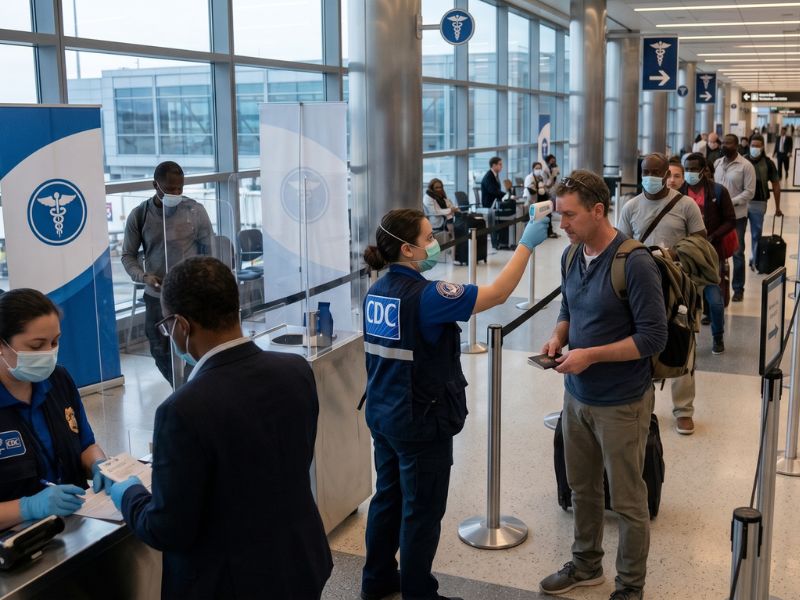
New airport restrictions and enhanced screening measures aim to prevent the spread of Ebola into the United States amid growing international concern
Washington, D.C., 25 May 2026 – The United States has introduced stricter travel screening and arrival restrictions following rising concerns over Ebola outbreaks in parts of East and Central Africa. The updated measures are part of a broader global health alert issued by U.S. authorities to strengthen border safety and monitor potential public health risks.
According to the U.S. Department of State and the Centers for Disease Control and Prevention (CDC), travelers who have recently visited the Democratic Republic of the Congo, Uganda, or South Sudan will now face enhanced health screening upon arrival in the United States. The move comes as international health agencies continue monitoring the spread of the virus in affected regions.
Under the updated guidelines, travelers arriving from these countries within the past 21 days must enter the United States only through designated airports, including Washington Dulles International Airport, Hartsfield-Jackson Atlanta International Airport, and George Bush Intercontinental Airport in Houston. Health officials will conduct additional screening procedures at these locations.
Authorities stated that the restrictions are designed to reduce the risk of Ebola entering the country while allowing officials to monitor travelers more effectively. The CDC emphasized that the overall risk to the American public remains low, but precautionary measures are necessary due to the seriousness of the outbreak.
The new rules also include temporary entry restrictions for certain non-U.S. passport holders who have recently been in the affected regions. Federal agencies, including the Department of Homeland Security, are coordinating with airlines and international partners to track potential exposure risks and strengthen airport monitoring systems.
Health experts say Ebola remains a highly dangerous disease, spreading through direct contact with infected bodily fluids. Symptoms can include fever, weakness, vomiting, diarrhea, and unexplained bleeding. Public health agencies are urging travelers to seek immediate medical attention if symptoms develop within 21 days of visiting affected areas.
The outbreak has also renewed conversations around global health preparedness, airport screening systems, and international emergency response coordination. While officials stress that these measures are precautionary, the situation highlights how rapidly infectious disease outbreaks can influence global travel policies and border management strategies.
Travelers are being advised to stay updated through official government channels, monitor travel advisories, and confirm flight routes before departure, as airlines may adjust schedules or reroute passengers under the new guidelines.

Latest News





Medical Business Outlook Magazine is a platform dedicated to exploring the growing medical business arena and the solutions that drive it forward. We connect readers with the latest trends, thought leadership, and expert perspectives that matter most in today's challenging medical environment.
We respect your privacy. The email address you provide will be used solely for subscription purposes and will not be stored or shared.
Subscribe Now
